The art of “seamless physiology”: the secret ingredient that turns your good habits into real, tangible results.
By Ehab Soltan
HoyLunes — Admit it. This morning you woke up, had your coffee (maybe with collagen, maybe black), went to the gym or did your stretches, and ate something with a superfood name. You checked every box on the “healthy person” list.
But why do you feel like you’re driving with the handbrake on? Why, despite the diet and the daily steps, does that mental fog refuse to clear, and physical progress feels like a snail on crutches?
The answer isn’t a lack of willpower. It’s that you are chopping up your biology.
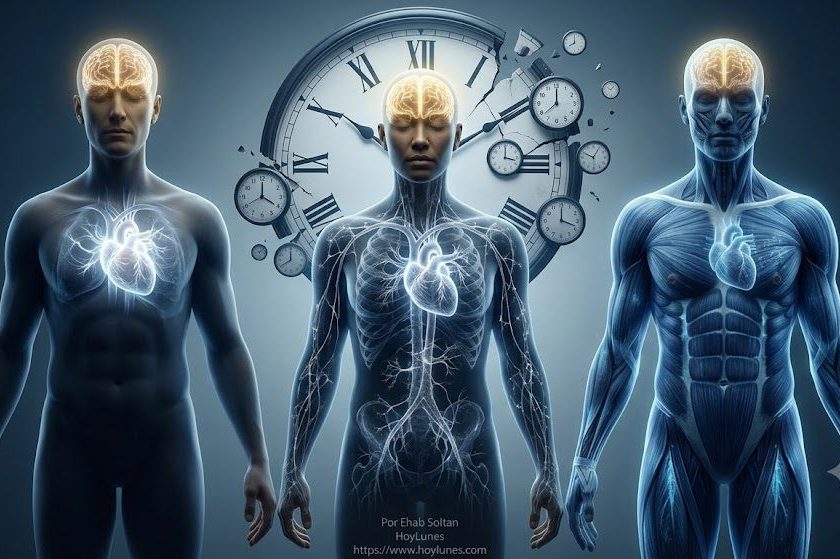
What seems like a sum of isolated good habits — training, eating well, resting — loses its effectiveness when executed in an environment of constant interruption. Human biology does not function through isolated actions, but through continuous processes. And those processes have one basic condition: they need time without interference to be completed.
Interrupted Metabolism: When starting doesn’t mean finishing
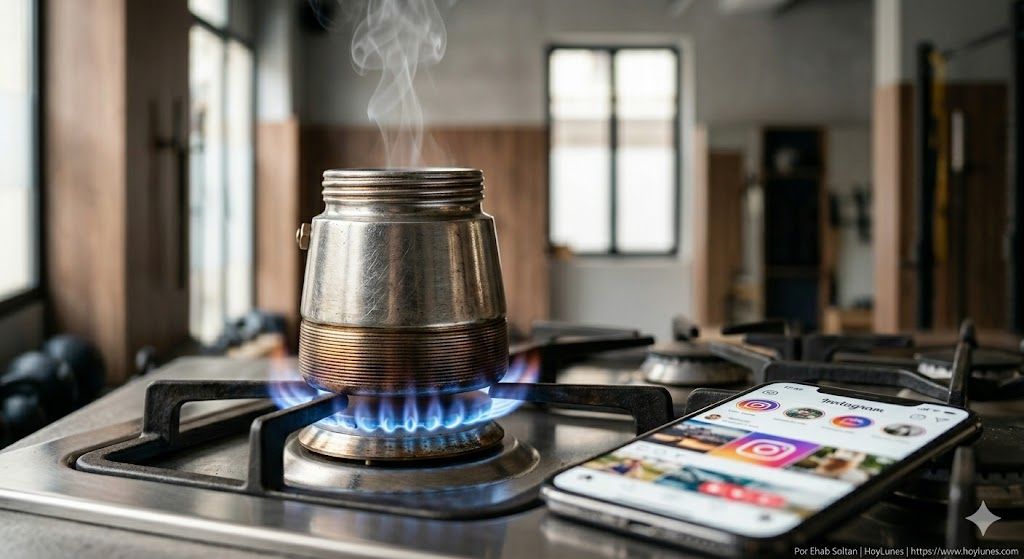
Imagine you are trying to boil water for tea. You turn on the heat, wait two minutes, then turn it off to check Instagram. You turn it back on, wait three minutes, then turn it off to reply to an “urgent” email (which never really is).
At the end of the day, you have spent a massive amount of gas, but he water is still cold.
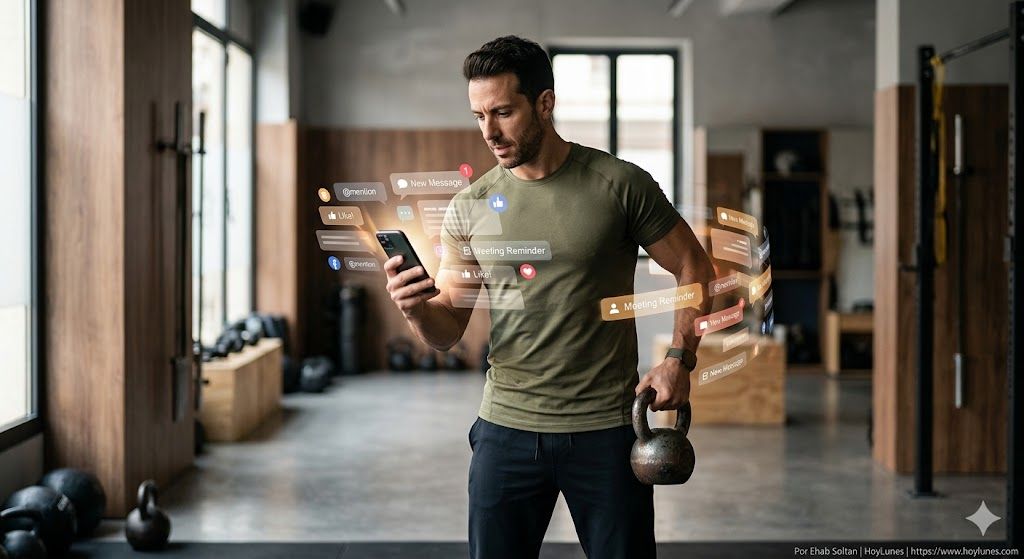
That is exactly what you do to your body when you train while looking at your phone or when you eat while replying to a WhatsApp message. It’s not just “distraction”; it is an interruption of coordinated physiological processes (hormonal response, neuromuscular activation, and autonomic nervous system regulation). Your body needs an acceleration ramp to enter fat-burning mode, muscle repair mode, or deep digestion mode. If you cut that ramp every five minutes, you never reach the highway.
The Science of the Incomplete: From Allostatic Load to “Attention Residue”
This isn’t just my intuition; it’s performance neuroscience. When you jump from one stimulus to another, you suffer from what Professor Sophie Leroy calls “Attention Residue”. Part of your brain stays “stuck” on the message you just read, even when you are already doing something else.
Physiologically, this is a silent disaster:
| What you think you’re doing | What your body experiences | Real Result |
| Training with a phone | Clash between cortisol (digital stress) and adrenaline (effort). | Lower strength gains and central fatigue. |
| Eating while working | The sympathetic system (fight/flight) overrides the parasympathetic. | Bloating, poor absorption, and hunger within the hour. |
| Constant multitasking | Allostatic Load: wear and tear from continuous adaptation. | Cellular aging and exhaustion. |
This pattern is not anecdotal. It is structural. In an environment where attention is fragmented by design, the body stops operating efficiently and enters a state of constant adaptation, which is energetically expensive and physiologically inefficient.
A study by the University of California showed that it takes an average of 23 minutes and 15 seconds to return to a task deeply after an interruption. If we apply this to your health, you are basically never “in the zone”.
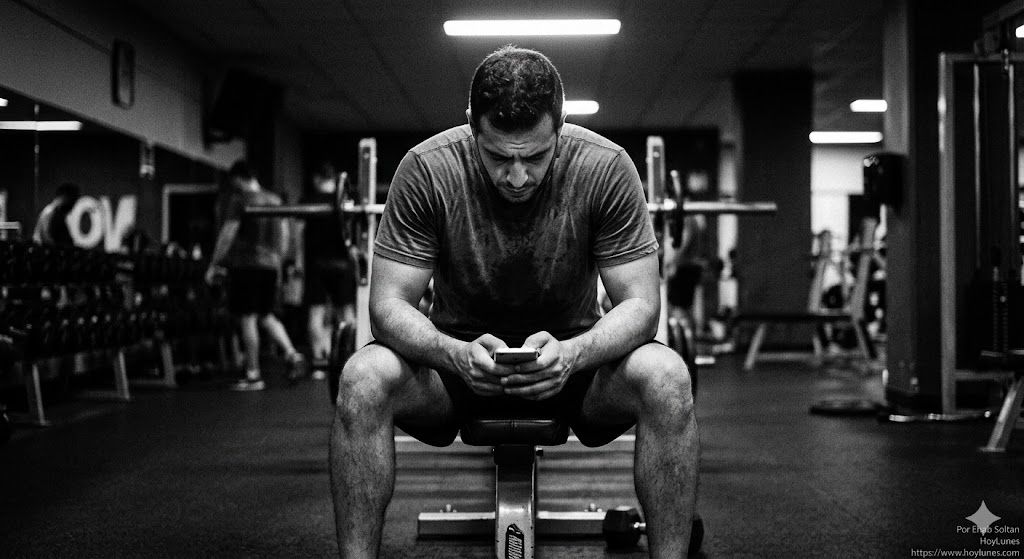
The Case of “Marcos, the Fit-Exhausted”
Marcos is every gym’s ideal client. He never misses a day. But Marcos has a tic: between sets, he unlocks his phone.
In those 60 seconds, he reads that a client is upset. His heart rate fluctuates — not from the effort, but from the stress. His body releases a confusing signal: Do I need to repair muscle or do I need to run from a digital tiger?
At the end of the month, Marcos is more tired, but his strength marks aren’t going up. His body hasn’t “finished” a single training session because the intra-workout recovery process was sabotaged by a 6-inch screen.
Marcos isn’t training less. He is training without biological continuity. And that difference — invisible to the naked eye — is what separates effort from results.

Your New Currency: Biological Depth
The commercial value of the next decade will not be in selling you more supplements, but in selling you shielded environments. The most successful wellness companies are no longer those that give you more data, but those that help you disconnect to connect.
“Dark Zone” Gyms: Spaces without screens or mirrors — just you and the iron.
Flow Bio-hacking: Supplementation not for energy, but for neuro-stability.
The true competitive advantage, both in your health and your business, is the ability to complete the biological processes you initiate.
This shift redefines value in the health and wellness sector. It is no longer about optimizing isolated habits, but about protecting the integrity of biological processes.
Organizations that understand this will not compete on products, but on execution contexts. This is already appearing in emerging models:
Training spaces without digital devices.
Clinics that integrate rest, nutrition, and exercise into single protocols.
Apps that limit stimulation rather than increasing it.
Practical Protocol: Reclaiming Biological Continuity
You don’t need a week-long spiritual retreat in Bali. You need to reclaim sovereignty over your next 60 minutes.
Train in Airplane Mode: The next time you move, the world doesn’t exist. Feel the oxygen reaching the muscle without the “noise” of notifications.
The 20-Minute Chewing Rule: Eat without screens. Let your nervous system tell your stomach: “We are safe, you can process this”.
Closing Cycles: If you start a task, finish it (or reach a natural pausing point) before checking your phone. Your brain will thank you with a dose of real dopamine, not synthetic.
Choose Your Own Adventure
You can continue being a tired data processor who goes to the gym, or you can start being a high-performance organism that respects its cycles.
The difference is not in the sweat, but in the silence between efforts. Your body has all the tools to repair you, heal you, and give you overflowing energy; the only thing it asks is that, for once, you let it finish the job.
The problem is not technological. It is physiological.
We have designed an environment that constantly interrupts systems that evolved to function without interruptions. And that mismatch doesn’t just affect performance. It defines long-term health.
The next notification can wait. Your longevity cannot.
Sources and Frameworks of Reference:
McEwen, B. S. (1998). Protective and Damaging Effects of Stress Mediators. New England Journal of Medicine.
eroy, S. (2009). Why is it so hard to do my work? Attention residue and interruption.
Cleveland Clinic studies on the relaxation response and protein synthesis.
#ModernHealth #Longevity #Neuroscience #Wellness #HealthTech #Attention #Stress #HoyLunes #HealthStrategy #EhabSoltan